








AI in Bug Detection: Finding Software Issues More Efficiently
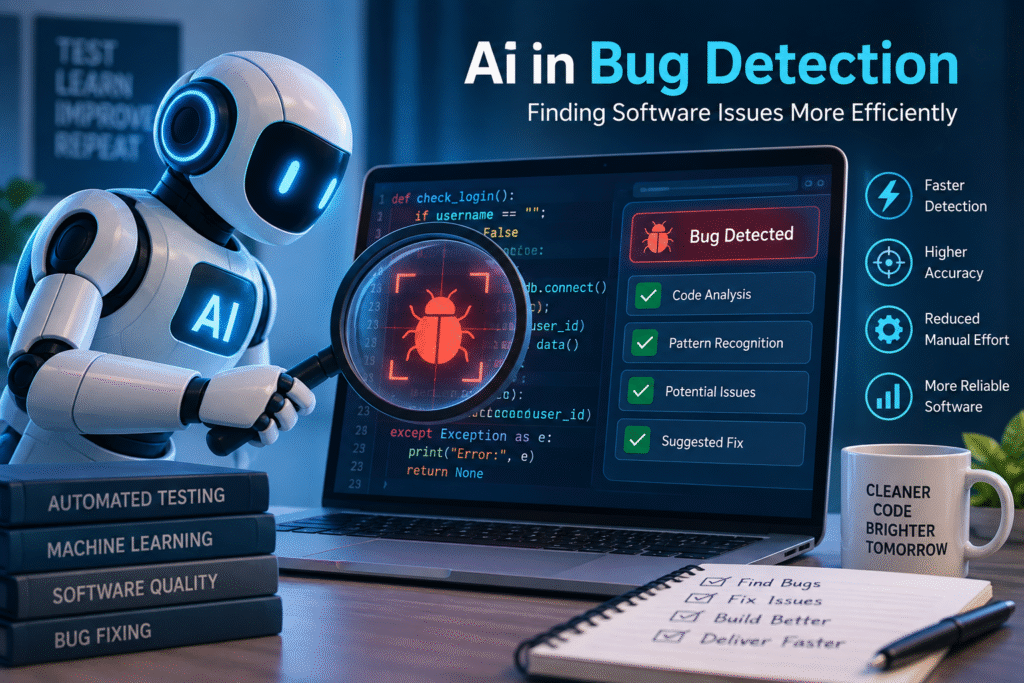
Software applications are becoming more complex every day. From mobile apps and websites to enterprise software and cloud-based platforms, developers need to ensure that their applications work correctly and reliably. One of the most important parts of software development is bug detection—finding and fixing problems before they affect users.
Traditionally, testers and developers have depended heavily on manual testing and predefined test cases to identify software issues. While these methods are still valuable, Artificial Intelligence (AI) is changing the way bugs can be detected, analyzed, and prevented.
What Is AI in Bug Detection?
AI in bug detection refers to using artificial intelligence and machine learning techniques to identify potential software problems automatically.
AI-powered testing tools can analyze source code, test results, application behavior, logs, and historical bug reports. By learning from large amounts of data, these systems can identify unusual patterns and highlight areas that may contain defects.
Instead of simply executing a fixed test case, AI can help testing teams understand where bugs are more likely to occur and which parts of an application require greater attention.
How AI Helps Detect Software Bugs
1. Automated Code Analysis
AI can analyze source code and identify potential problems such as logical errors, suspicious coding patterns, security weaknesses, and possible performance issues.
This allows developers to discover problems earlier in the development process rather than waiting until the application reaches the testing or production stage.
2. Intelligent Test Case Generation
Creating test cases manually can take significant time, especially for large applications. AI can analyze application requirements and existing test data to suggest or generate test cases.
It can also help identify different input combinations and edge cases that human testers might overlook.
3. Predicting High-Risk Areas
Not every part of an application has the same probability of containing bugs. AI can analyze historical defect data, code changes, and previous testing results to identify areas that may be more likely to fail.
For example, if a particular module has frequently produced bugs after updates, an AI-based system can flag that module for additional testing.
4. Faster Bug Classification
Large software projects can generate hundreds or even thousands of bug reports. Reviewing and categorizing them manually can be time-consuming.
AI can help classify bugs based on their type, severity, affected component, and similarity to previous issues. This helps development teams prioritize important problems more quickly.
5. Identifying Duplicate Bugs
Different testers may report the same problem using different descriptions. AI can compare bug reports and recognize similarities between them.
This reduces duplicate reports and helps teams maintain a cleaner and more organized bug-tracking process.
6. Analyzing Logs and Error Patterns
Software applications generate large amounts of logs and error information. Finding useful information in these logs manually can be difficult.
AI can examine logs, detect unusual behavior, and identify patterns that may indicate a software failure. This can be particularly useful for applications running continuously in production environments.
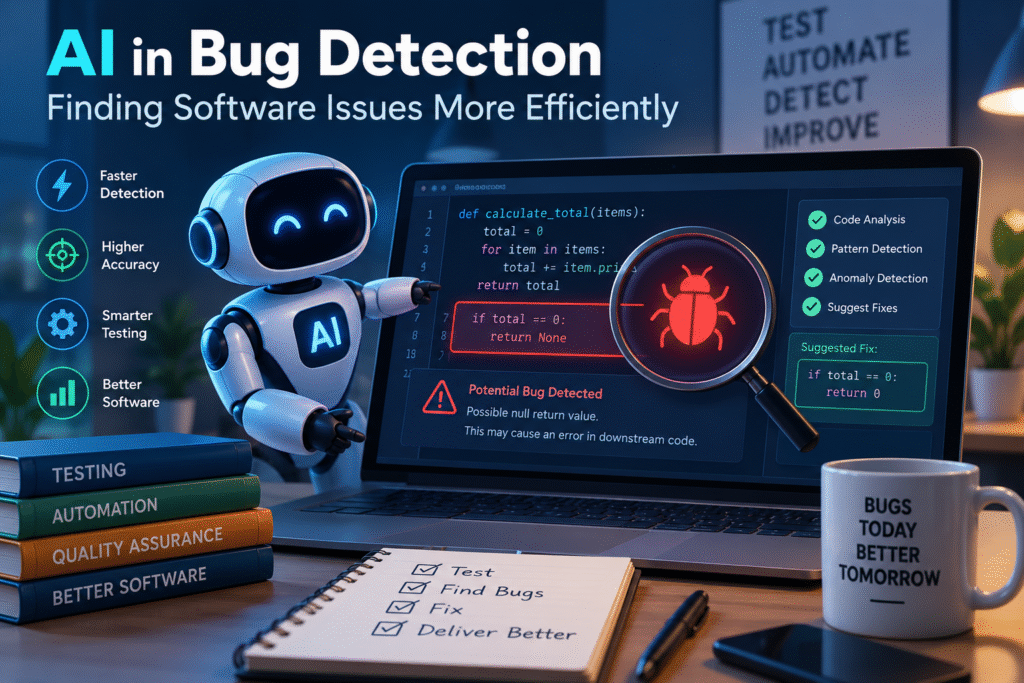
Benefits of Using AI for Bug Detection
The use of AI in software testing provides several advantages:
Faster Testing:
AI can automate repetitive testing and analysis tasks, reducing the time required to identify problems.
Improved Test Coverage:
AI can help identify additional test scenarios and edge cases, increasing the areas of an application that are tested.
Early Bug Detection:
Potential defects can be identified earlier in the development lifecycle, helping reduce the cost of fixing them later.
Better Prioritization:
AI can help teams determine which bugs are more critical and require immediate attention.
Reduced Manual Work:
Testers can spend less time performing repetitive tasks and more time on exploratory testing and complex problem-solving.
Continuous Testing:
AI-powered tools can support automated testing as code is continuously changed and deployed.
A Simple Real-World Example
Imagine an e-commerce website where customers can search for products, add items to a cart, make payments, and track orders.
A traditional testing process may involve manually checking each feature after every major update. Testers might discover that the payment system fails when users apply a particular discount code.
With AI-assisted testing, the system can analyze previous test results and application behavior and identify that changes to the discount module may affect the payment process. It can then suggest additional test scenarios around discounts, carts, and payments.
As a result, the testing team can investigate the high-risk areas sooner.
AI and the Future of Software Testing
AI is becoming an important part of modern software development and testing. As applications become more complicated, organizations need faster and smarter ways to maintain software quality.
Future AI-based testing systems may become increasingly capable of understanding application requirements, generating test scenarios, analyzing failures, predicting defects, and assisting developers in fixing problems.
However, human expertise will continue to play an important role. AI can process large amounts of information quickly, but testers provide critical thinking, business understanding, creativity, and judgment.
Conclusion
AI is transforming bug detection by making software testing more automated, intelligent, and efficient. From analyzing code and generating test cases to predicting high-risk areas and analyzing error logs, AI can support development teams throughout the software development lifecycle.
The goal is not to replace software testers but to help them work smarter and focus on the areas where human expertise matters most.
As AI technology continues to evolve, organizations that combine AI-powered testing with skilled software testers and developers can build more reliable, secure, and high-quality applications while reducing the time and effort required to find software issues.