








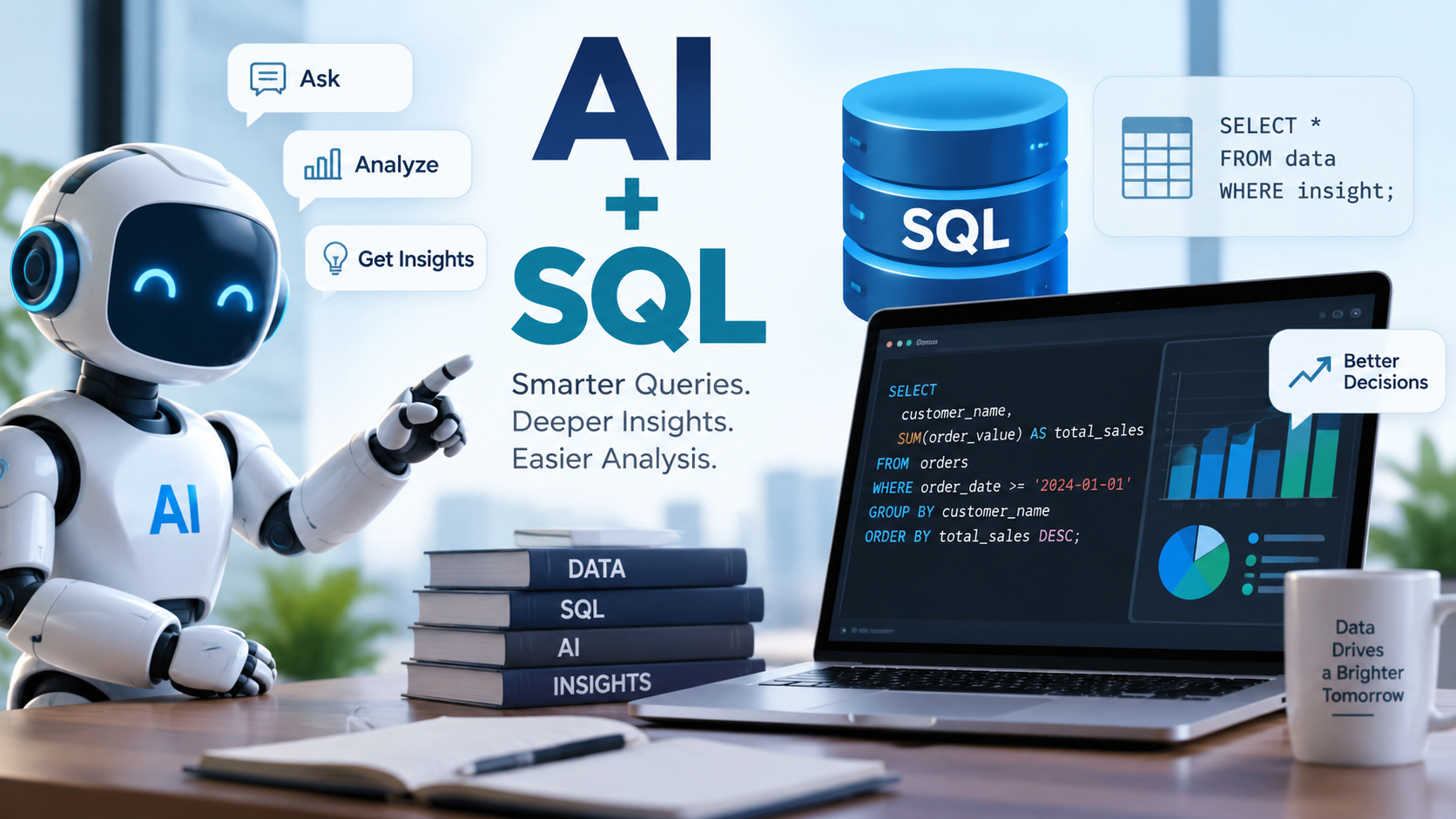
AI and SQL: Making Database Analysis Easier
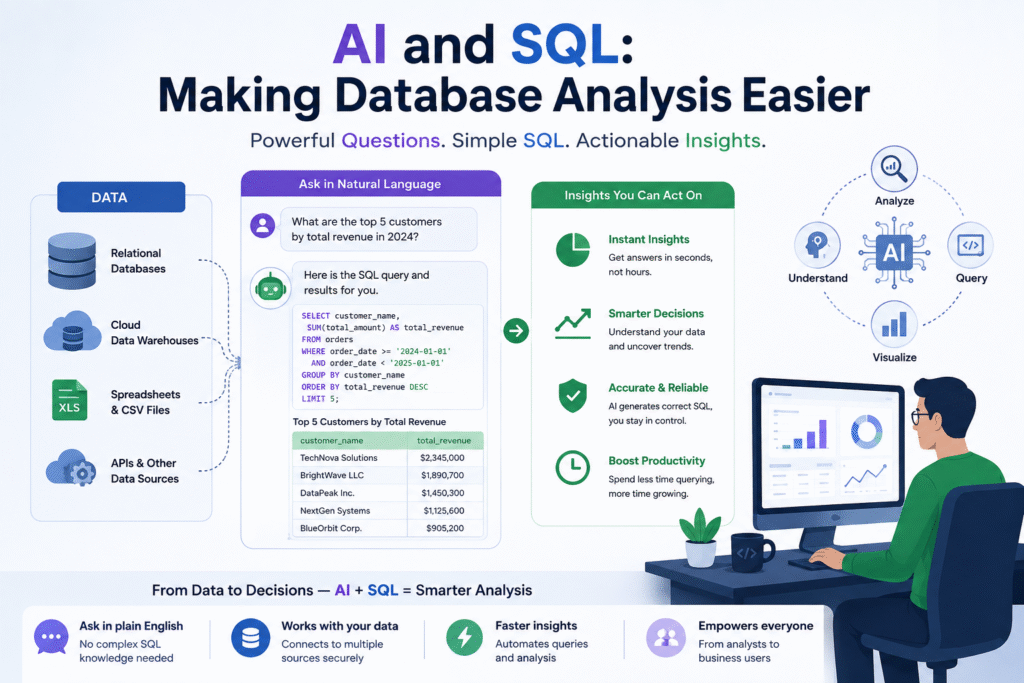
In today’s data-driven world, businesses generate enormous amounts of information every day. From customer transactions and website activity to sales figures and operational records, databases have become essential for making informed decisions.
However, analyzing this data often requires knowledge of SQL (Structured Query Language). While SQL is powerful, writing complex queries can be challenging—especially for beginners.
This is where Artificial Intelligence (AI) is changing the way we work with databases.
What Is SQL?
SQL is a programming language used to communicate with relational databases. It allows users to retrieve, filter, organize, and analyze data.
SQL can also perform more advanced tasks, such as joining multiple tables, calculating averages, grouping records, and identifying trends.
How AI Makes SQL Easier
AI-powered tools can help users interact with databases using natural language instead of writing every SQL query manually.
Key Benefits of AI-Powered SQL
1. Natural Language Queries
One of the biggest advantages of AI is the ability to ask questions in everyday language.
Users can ask:
“Which products had the highest sales last month?”
The AI can translate that request into SQL and retrieve the relevant information.
2. Faster Data Analysis
Writing complicated SQL queries manually can take time. AI can generate queries quickly, helping analysts explore data more efficiently.
Instead of spending several minutes—or sometimes much longer—constructing a query, users can start with a simple question and refine it.
3. Helps Beginners Learn SQL
AI can also act as a learning assistant.
For example, a beginner can ask:
“Explain this SQL query.”
The AI can break the query into smaller sections and explain what each part does.
This allows users to learn SQL while working with real datasets.
4. Finding Errors
SQL queries can fail because of syntax mistakes, incorrect table names, or logical errors.
AI tools can help identify potential problems and suggest corrections.
5. Generating Reports and Insights
AI can go beyond creating SQL queries. It can help interpret the results.
For example, after analyzing sales data, an AI system might summarize:
- Which products performed best
- Which regions generated the most revenue
- How sales changed over time
- Which categories are declining
This can turn raw database results into information that is easier for decision-makers to understand.
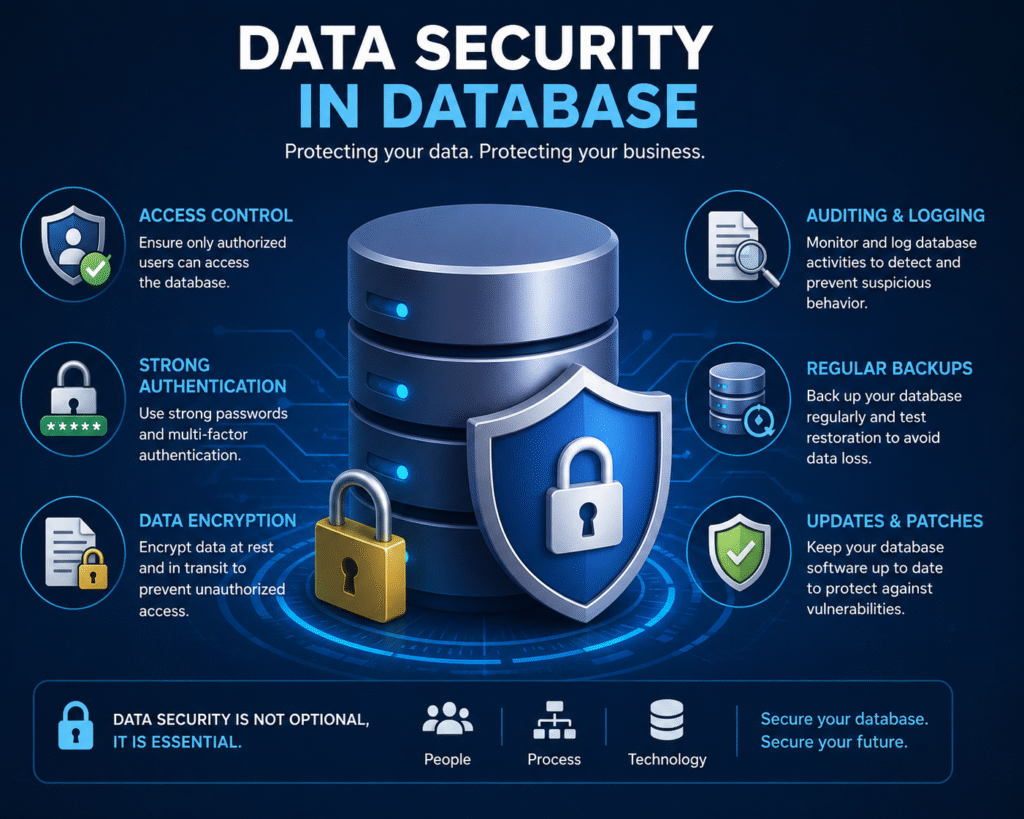
What About Data Security?
While AI can make database analysis easier, organizations need to be careful when connecting AI systems to databases.Sensitive information such as customer details, financial records, passwords, or personal data should be protected.
Organizations should consider:
Access permissions
Data encryption
User authentication
Privacy regulations
Query validation
Limiting access to sensitive tables
AI-generated SQL should also be reviewed before it is used in important production environments.
The Future of Database Analysis
AI is making databases more accessible to developers, analysts, business users, and other professionals.Instead of requiring every user to become an SQL expert, AI can serve as a bridge between human questions and database queries.However, SQL knowledge remains valuable. AI-generated queries are not always perfect, and users still need to understand their data, database structure, and business requirements.
The most effective approach is not AI instead of SQL, but AI together with SQL.
Conclusion
AI and SQL are becoming a powerful combination for modern data analysis. AI can help users write queries, understand SQL, identify errors, explore data, and summarize results.
For beginners, it can make SQL less intimidating. For experienced analysts, it can reduce repetitive work and speed up data exploration.
As AI technology continues to develop, interacting with databases may become as simple as asking a question in plain language—while SQL remains the foundation working behind the scenes.