







How AI Can Improve Social Media Engagement
Social media has become one of the most important channels for businesses to connect with their audience, build brand awareness, and generate leads. However, simply posting content regularly is no longer enough. Audiences expect relevant, personalized, creative, and timely content.
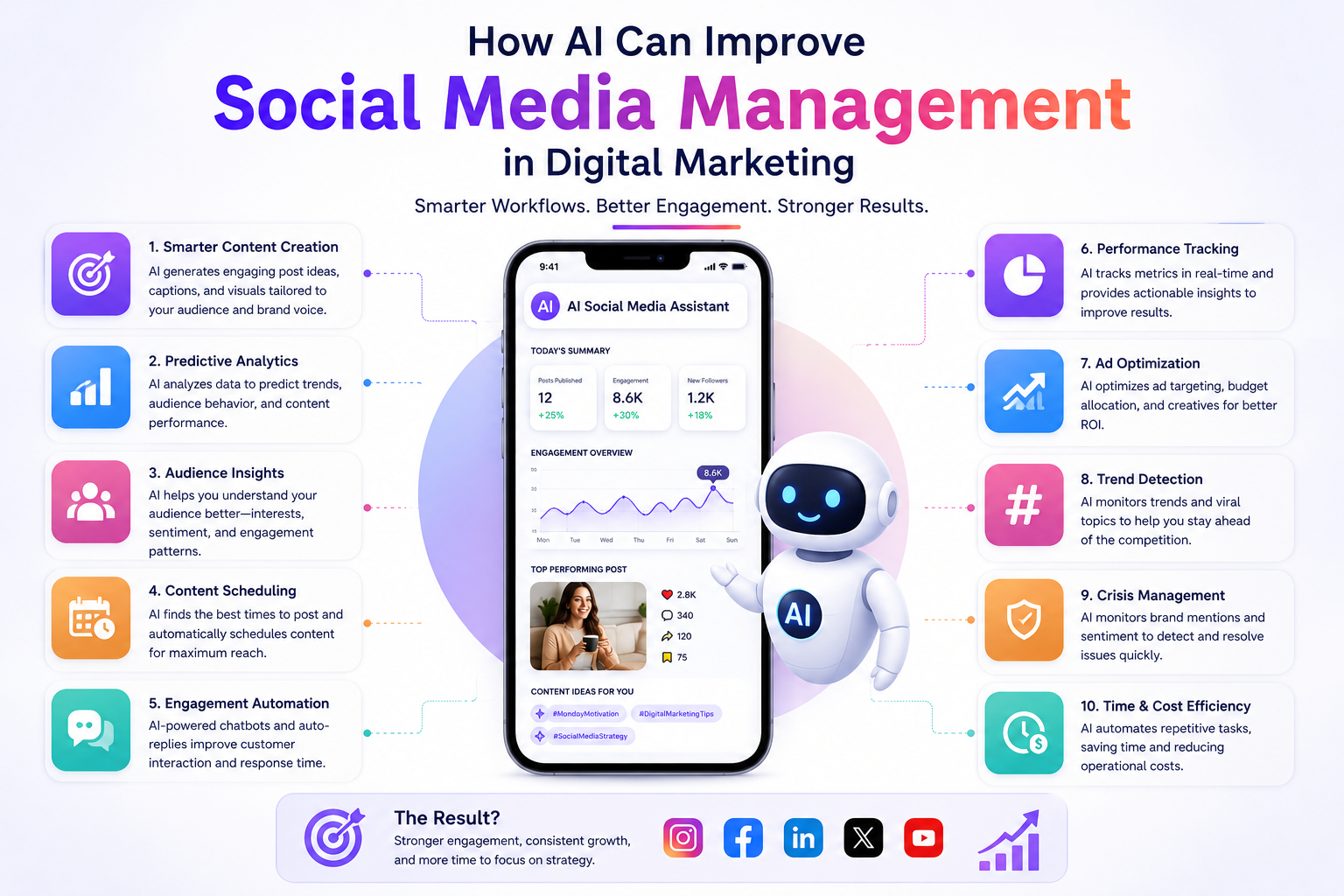
This is where Artificial Intelligence (AI) is changing the way businesses approach social media marketing. From understanding audience behavior to creating content and analyzing performance, AI can help marketers improve engagement and make better decisions.
What Is Social Media Engagement?
Social media engagement refers to the ways users interact with content on platforms such as Instagram, Facebook, LinkedIn, YouTube, and X.
Common forms of engagement include:
- Likes and reactions
- Comments
- Shares
- Saves
- Clicks
- Direct messages
- Mentions
- Video views and watch time
- Follows
Higher-quality engagement generally indicates that content is relevant and interesting to the target audience.
1. Creating More Relevant Content
One of the biggest advantages of AI is its ability to help marketers understand what audiences are interested in.
AI-powered tools can analyze previous posts, audience interactions, search trends, and content performance to identify topics and formats that may attract attention.
For example, if a digital marketing page receives high engagement on posts about SEO tips, AI can help identify similar content ideas such as:
- Common SEO mistakes
- Beginner SEO checklists
- AI tools for SEO
- Keyword research tips
- SEO trends
This allows marketers to create content based on audience interests rather than relying entirely on guesswork.
2. Personalized Content for Different Audiences
Different customers have different interests. AI can help businesses divide their audience into groups and create more personalized content.
For example, an online education company may have:
- Students interested in programming
- Professionals interested in digital marketing
- Beginners looking for career guidance
Instead of showing the same content to everyone, marketers can create content specifically for each audience segment.
Personalization can make social media communication feel more relevant and useful.
3. Generating Content Ideas
Coming up with fresh social media ideas every day can be challenging for marketers.
AI can help generate ideas for:
- Instagram posts
- Reels
- Stories
- LinkedIn posts
- YouTube content
- Polls and quizzes
- Educational carousels
- Promotional campaigns
For example, a fitness brand could use AI to generate a month’s worth of content ideas around workouts, nutrition, motivation, and customer success stories.
However, marketers should review and adapt AI-generated ideas so that the content matches the brand’s voice and audience.
4. Improving Captions and Copy
A good caption can encourage users to stop scrolling and interact with a post.
AI writing tools can help marketers create different versions of captions with various tones, such as:
- Professional
- Friendly
- Educational
- Entertaining
- Promotional
AI can also help improve grammar, clarity, hooks, calls to action, and readability.
For example, instead of simply writing:
“Learn digital marketing with our course.”
A marketer could use AI to develop a stronger hook and call to action that encourages the audience to comment, share, or learn more.
5. Understanding the Best Time to Post
Posting at the right time can help content reach more people.
AI can analyze historical engagement data to identify patterns in when an audience is most active. This can help marketers determine suitable posting times for different platforms and audience groups.
For example, AI might identify that a particular audience interacts more frequently with LinkedIn posts during weekday mornings.
Rather than following a generic “best time to post,” marketers can use their own audience data to make better scheduling decisions.
6. Faster Responses Through AI Chatbots
Social media users often expect quick responses to their questions.
AI-powered chatbots can help businesses handle common questions about:
- Products and services
- Pricing
- Business hours
- Course details
- Order status
- Booking information
- Frequently asked questions
This can improve response speed while allowing human team members to focus on more complex conversations.
Importantly, businesses should provide a way for customers to reach a human when an issue requires personal attention.